Water Damage Restoration
Cleanup and recovery for damage caused by plumbing leaks, appliance failures, storm intrusion, and other water events. Work is planned around the water source, contamination level, affected materials, and moisture readings.
Serving Naples, Florida & surrounding areas
Emergency water cleanup in Naples, Florida
Fast emergency cleanup, controlled drying, and a clear recovery plan for water-damaged homes and businesses.
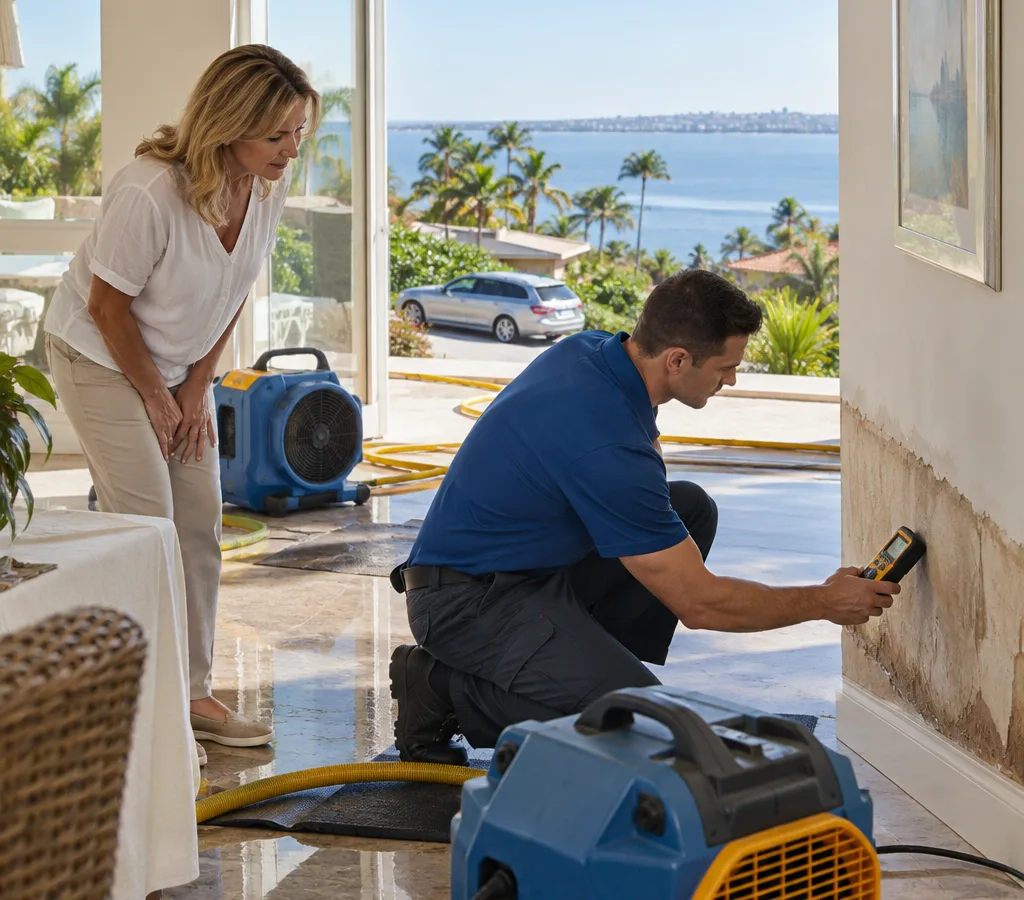
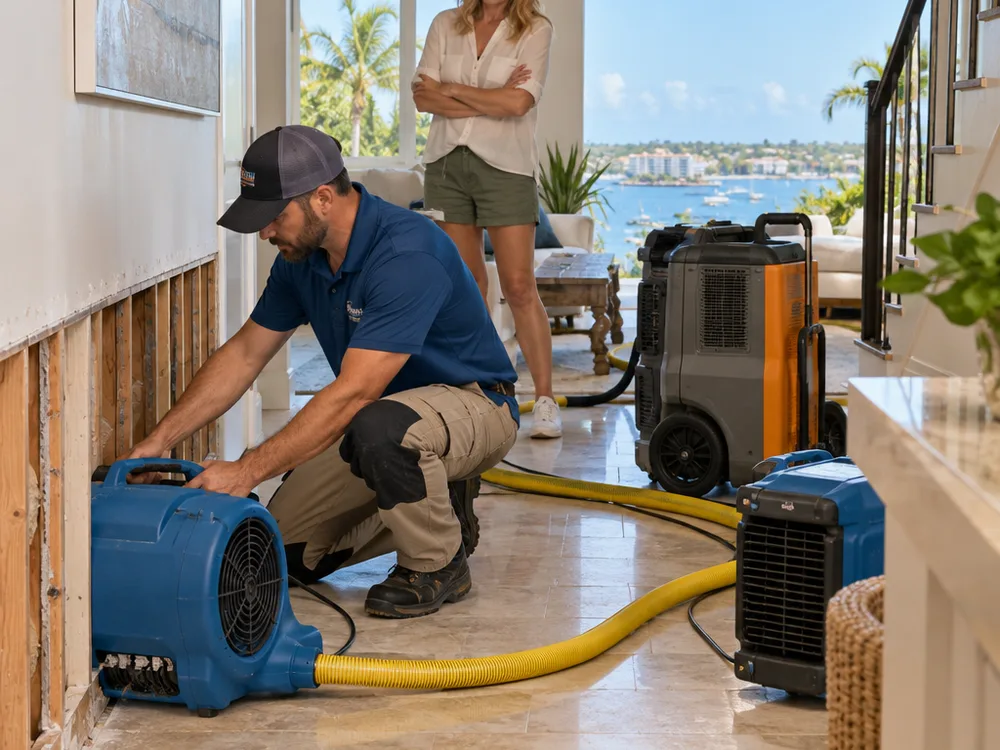
Water restoration Naples service starts by identifying the source, limiting further damage, and checking how far moisture has traveled. Water can move beneath flooring, behind baseboards, into wall cavities, and through cabinets even when the visible surface looks dry.
Water Restoration Naples FL handles cleanup and structural drying for homes and businesses in Naples. The work may include water extraction, removal of materials that cannot be saved, air movement, dehumidification, moisture monitoring, cleaning, and preparation for repairs. Each job should be based on the affected materials and measured moisture conditions, not assumptions.
Naples properties face heavy seasonal rain, tropical weather, plumbing failures, appliance leaks, roof intrusion, and air-conditioning drain problems. Quick action can reduce continued absorption and help prevent secondary damage. If water may contain sewage or other contaminants, avoid the affected area until it has been assessed.
Restoration services
Cleanup and recovery for damage caused by plumbing leaks, appliance failures, storm intrusion, and other water events. Work is planned around the water source, contamination level, affected materials, and moisture readings.
Complete recovery scope
The first assessment identifies the likely source, affected rooms, water category, and immediate hazards. Standing water near electrical components, weakened ceilings, and contaminated water require added precautions before cleanup begins.
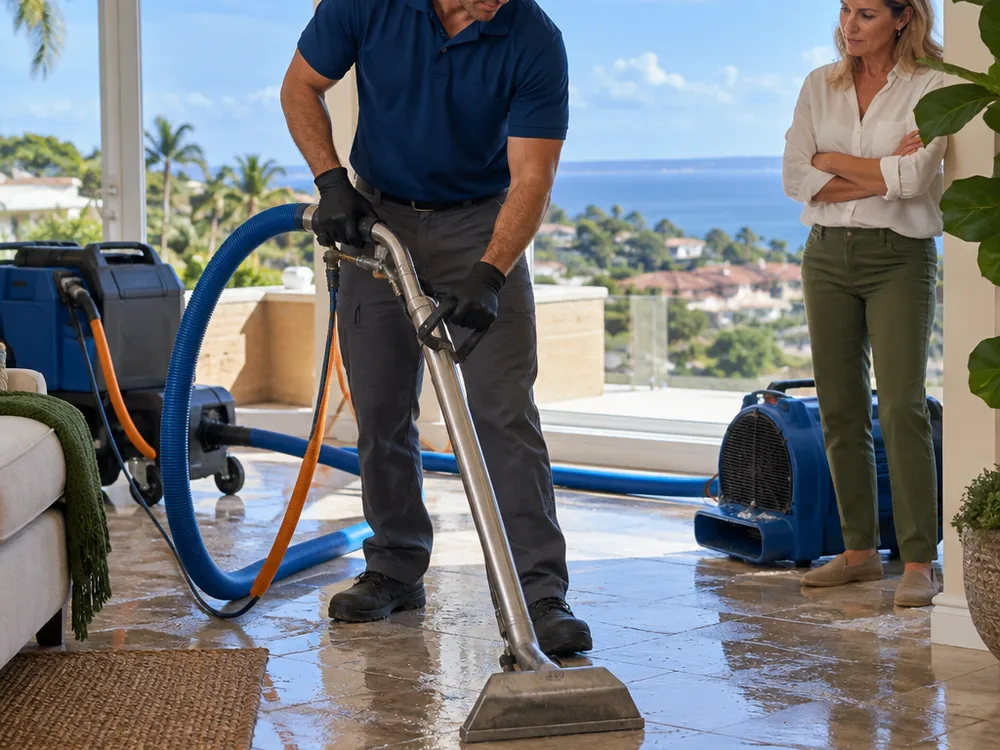
Extraction equipment removes standing water from accessible surfaces and materials. Prompt removal limits continued absorption into flooring, drywall, cabinets, and framing, creating better conditions for controlled structural drying.
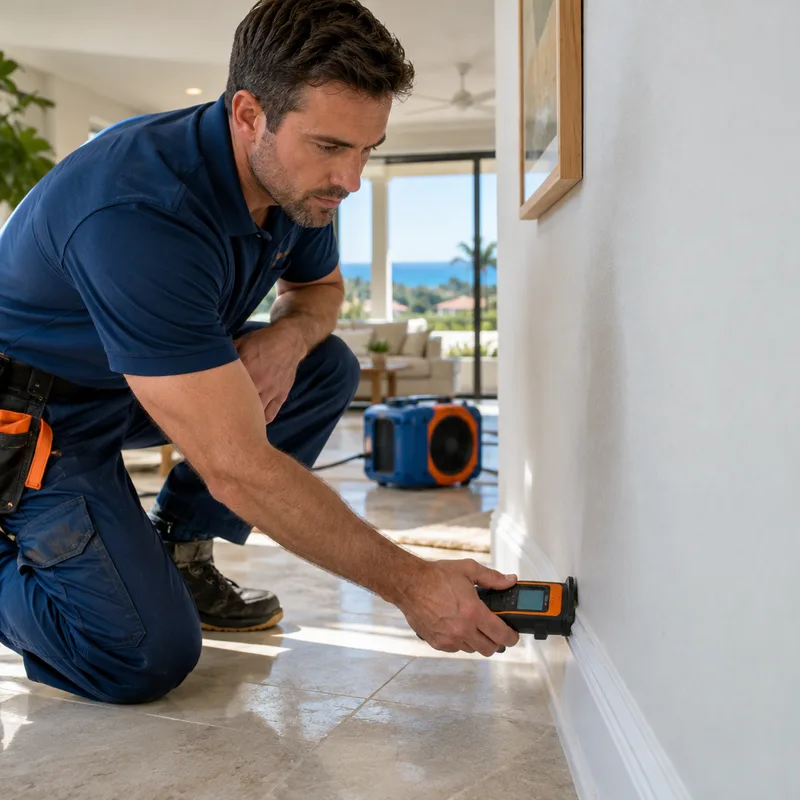
Moisture meters help locate damp materials beyond the visible water line. Readings from walls, floors, and other building components guide equipment placement and show whether hidden areas need further investigation.
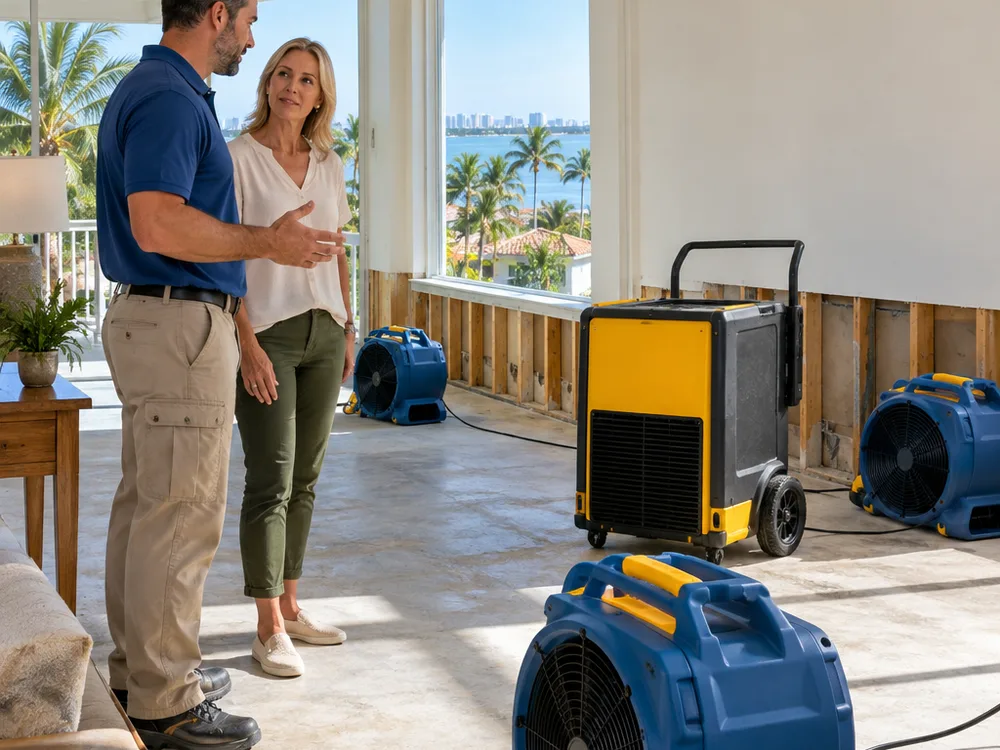
Air movers and dehumidifiers are positioned according to the affected space and materials. Temperature, humidity, and moisture readings are monitored so drying decisions are based on changing site conditions.
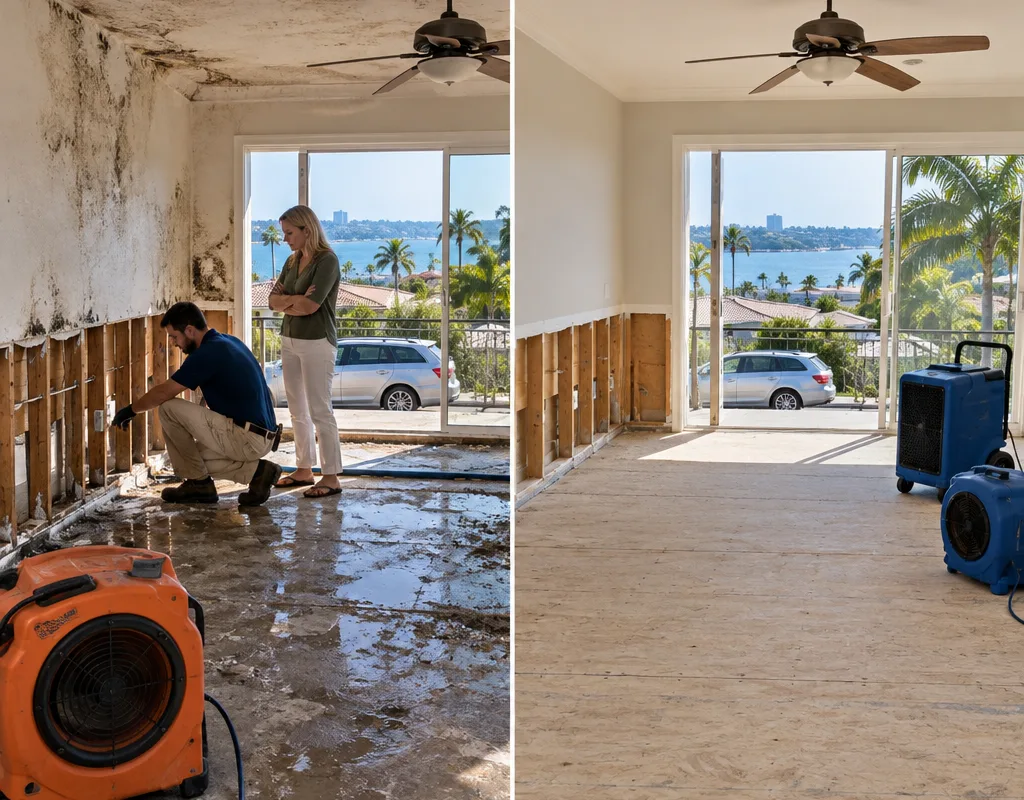
Affected surfaces are cleaned according to the water source and material condition. Porous items that are contaminated or too damaged to dry safely may need controlled removal before the area can be restored.
After drying, the property can be evaluated for repair needs such as drywall replacement, trim work, flooring repairs, or cabinet restoration. The scope depends on what was removed and what can be retained.
Water Restoration Naples FL provides water restoration for homes and businesses in Naples, Florida.
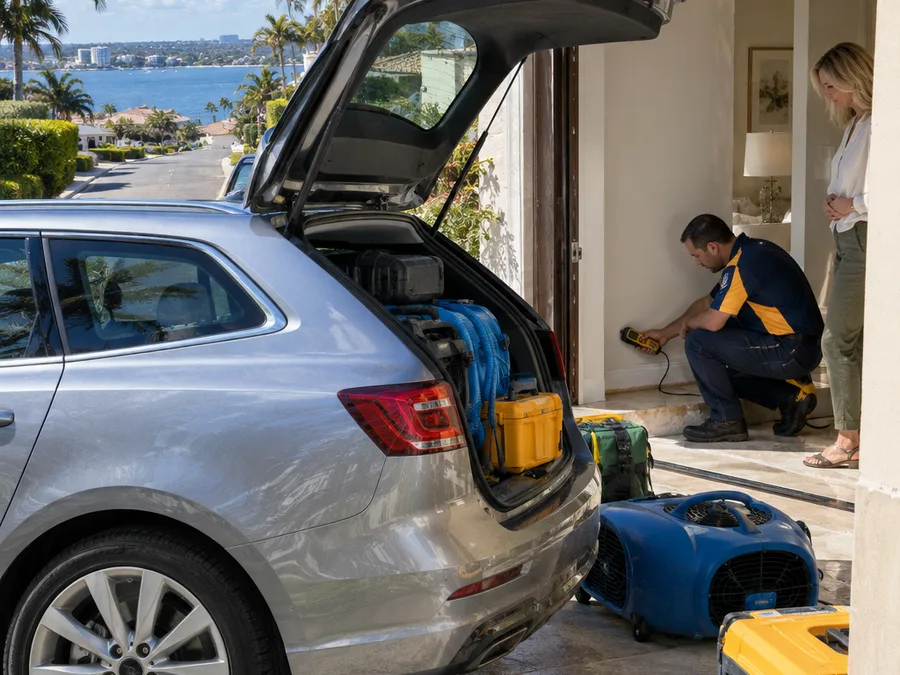
The company focuses on the practical stages that follow a leak, overflow, or storm-related water entry: evaluating affected areas, removing accessible water, drying structural materials, and determining what needs cleaning, removal, or repair. Customers receive an explanation of observed conditions and the work appropriate for the property.
Good restoration work depends on measurements. Surface appearance alone cannot confirm that drywall, subflooring, framing, or cabinetry is dry. Moisture readings and indoor humidity help guide the drying process and support informed decisions about materials that may be saved.
The Naples area has a humid subtropical climate, so indoor moisture control matters during restoration. Water Restoration Naples FL considers the building materials, source of water, extent of migration, and current conditions before setting the work plan.
Typical project ranges
Water restoration in Naples typically costs about $1,200 to $6,000 for a limited to moderate loss, while extensive damage can exceed $10,000. A small clean-water extraction and drying job may run $700 to $2,000, depending on the materials involved.
Final pricing changes with the water category, affected square footage, extraction needs, drying time, access, damaged materials, and required demolition or repairs. Storm losses and sewage contamination often require more labor and protective measures. The exact cost is confirmed after an on-site inspection.
From inspection to repair planning
The affected rooms are checked for the water source, visible damage, safety concerns, and moisture migration. This assessment helps define the initial cleanup and drying plan.
The active source must be stopped or controlled before effective drying can proceed. A separate plumbing, roofing, or mechanical repair may be needed depending on what caused the loss.
Accessible water is removed with appropriate extraction equipment. Saturated materials are evaluated to determine whether they can be dried in place or should be removed.
Air movers and dehumidifiers are placed based on the layout, materials, and moisture readings. Equipment may be adjusted as evaporation and humidity conditions change.
Affected materials and indoor conditions are checked during drying. Readings help determine whether hidden moisture remains and when the drying goal has been reached.
Once dry conditions are established, remaining surfaces can be cleaned and necessary repairs can be scoped. The final work depends on material loss and the condition of the building components.
Early extraction and measured drying can limit how far water damage spreads. Arrange an inspection to establish the source, affected materials, and next steps.
Call for Emergency HelpLocal property support
Water Restoration Naples FL serves established neighborhoods and newer communities throughout Naples, including properties exposed to plumbing leaks, storm entry, and indoor humidity.
Older residences, renovated homes, and properties near the coast can contain varied flooring and wall assemblies that require careful moisture mapping after water intrusion.
Waterfront homes and condominiums often include finished interiors, shared building components, and enclosed cabinetry where water can migrate beyond the immediately visible area.
Condominiums and single-family homes may require drying plans that account for concrete construction, finished flooring, common walls, and building access requirements.
Larger lots and detached homes can involve private water systems, long plumbing runs, and roof or storm intrusion affecting several building materials.
Established homes, condominiums, and newer development create a mix of construction types, so extraction and drying methods must match the materials present.
Planned communities, single-family homes, and condominiums commonly contain tile, drywall, cabinetry, and air-conditioning systems that can conceal moisture after indoor leaks.
Fieldwork and drying
Answers before service
Emergency availability depends on current demand, property access, and storm conditions. Contact Water Restoration Naples FL as soon as the water is discovered so the situation can be reviewed and the next available response discussed.
That depends on the source, affected area, and potential hazards. Avoid rooms with sewage, sagging ceilings, wet electrical components, or unstable materials, and follow instructions from emergency authorities when severe weather has affected the property.
Some materials can be dried, while others require removal. The decision depends on contamination, physical damage, how long the material remained wet, and whether moisture can be removed without trapping it inside the assembly.
Yes, Water Restoration Naples FL provides water restoration for residential and commercial properties in Naples. The equipment plan and work scope are based on the building layout, affected materials, occupancy needs, and measured moisture conditions.
Stop the source only if it is safe, avoid contact with contaminated water, and keep people away from electrical hazards or weakened ceilings. Photos of visible damage may also help document conditions before cleanup starts.
The observed damage, affected areas, moisture readings, and restoration work can be documented for the property owner. Coverage decisions, deductibles, and claim payments remain subject to the terms of the insurance policy and insurer review.
Provide the property location, suspected water source, rooms affected, when the damage was found, and whether standing water or safety hazards remain. These details help clarify the immediate response needs before the on-site inspection.
Describe what happened and which areas are affected. Water Restoration Naples FL can assess the conditions and explain the appropriate cleanup, drying, and repair steps.