Water Extraction
Portable or truck-mounted extraction equipment removes standing water and moisture held in carpet or other accessible materials. Faster bulk-water removal reduces the load placed on drying equipment.
Serving Naples, Florida & surrounding areas
Water damage restoration in Naples, Florida
Fast action, careful moisture control, and a documented drying plan for homes and businesses affected by leaks, storms, or indoor flooding.
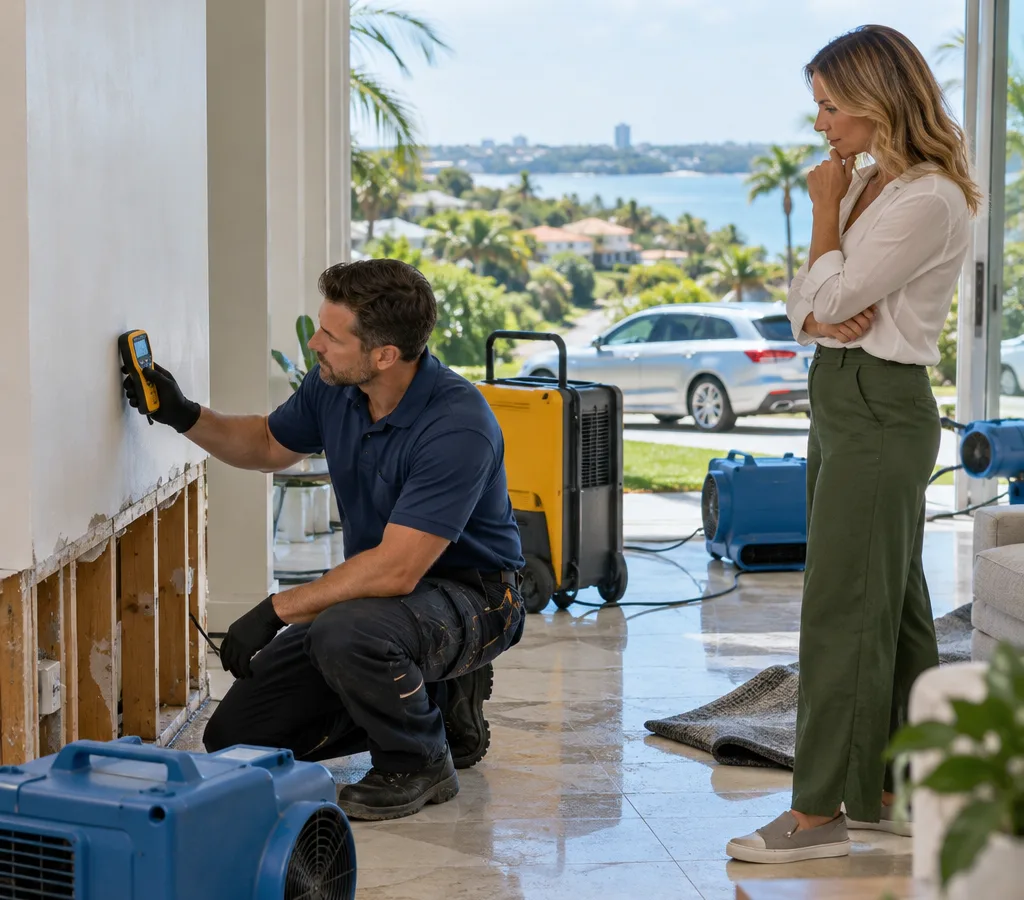
Immediate response
Water damage restoration in Naples begins with finding the source, identifying every affected material, and controlling moisture before damage spreads. Water can travel beneath flooring, wick into drywall, and collect inside cabinets or wall cavities. A room may look dry while the subfloor or insulation still holds moisture.
Water Restoration Naples FL evaluates the affected area, documents moisture readings, removes standing water when needed, and builds a drying plan around the materials involved. As Naples' trusted water restoration team, we focus on practical decisions that protect the property and avoid unnecessary removal. The scope may include extraction, containment, dehumidification, air movement, cleaning, selective demolition, and preparation for repairs.
Naples properties face heavy rain, tropical weather, high outdoor humidity, plumbing failures, appliance leaks, and air-conditioning drain problems. Humid air can slow evaporation, so professional drying depends on measured conditions rather than leaving fans in a room and hoping for the best.
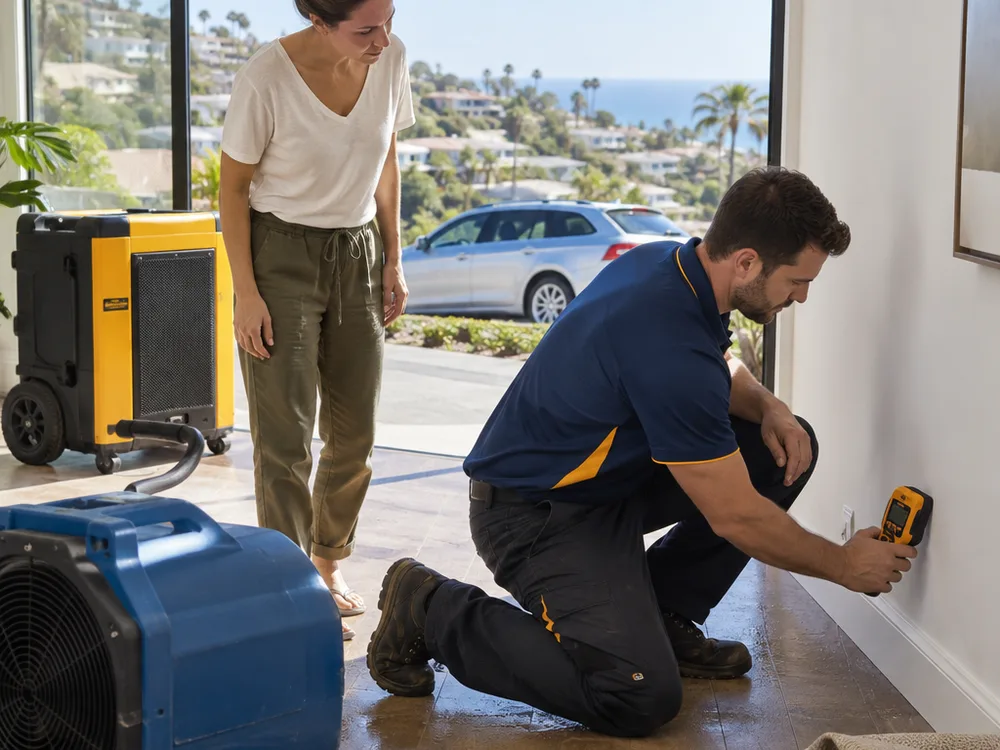
The right response depends on where the water came from, how long materials were wet, and which parts of the building were affected. A clean-water supply line leak is handled differently from a sewage backup or outdoor floodwater intrusion.
Industry practice groups water into three categories. Category one water begins from a sanitary source, such as a broken supply line. Category two water contains enough contamination to present added risk. Category three water is grossly contaminated and can include sewage or floodwater. Conditions can worsen with time and contact with building materials, so the source and current condition both matter.
Single-family homes in Golden Gate Estates may have larger footprints, detached structures, or well and septic components that affect inspection access. Condominiums near Park Shore and Pelican Bay can require coordination with building management because moisture may cross shared walls, ceilings, or floor assemblies. In Old Naples, restoration plans may need to account for older finishes and occupied properties with limited staging space. These details change equipment placement, containment, documentation, and the removal plan.
Complete restoration scope
Portable or truck-mounted extraction equipment removes standing water and moisture held in carpet or other accessible materials. Faster bulk-water removal reduces the load placed on drying equipment.
Moisture meters and thermal imaging can help locate damp areas that are not visible. Readings are checked against unaffected materials to establish practical drying goals.
Commercial air movers promote evaporation while low-grain refrigerant dehumidifiers collect moisture from the air. Equipment placement is adjusted as readings change.
Unsalvageable drywall, insulation, flooring, or trim may be removed when contamination, swelling, delamination, or prolonged saturation makes drying in place unsuitable.
Affected surfaces are cleaned according to the water category and material type. Odor treatment follows source removal and drying rather than masking persistent moisture.
Photos, moisture records, equipment logs, and a clear scope help property owners understand what was affected, what work was completed, and what repairs may remain.
From source control to repair planning
The active source should be shut off when it is safe to do so. The initial assessment also checks for electrical concerns, sagging ceilings, contaminated water, and other conditions that may restrict access.
Technicians examine affected rooms and adjoining areas. Meter readings help trace water beneath finishes and establish the boundaries of the work.
Standing water is removed, vulnerable contents may be relocated, and containment is installed when contamination or demolition calls for separation from occupied areas.
Material decisions are based on contamination, porosity, physical damage, and the ability to dry the assembly. Durable materials may remain when they can be cleaned and dried safely.
Air movers and dehumidifiers are installed according to the affected volume and building conditions. Temperature, humidity, and material moisture are monitored so equipment can be repositioned or removed at the right time.
Final readings confirm whether drying goals have been met. The owner receives a review of completed mitigation work and any remaining repair needs.
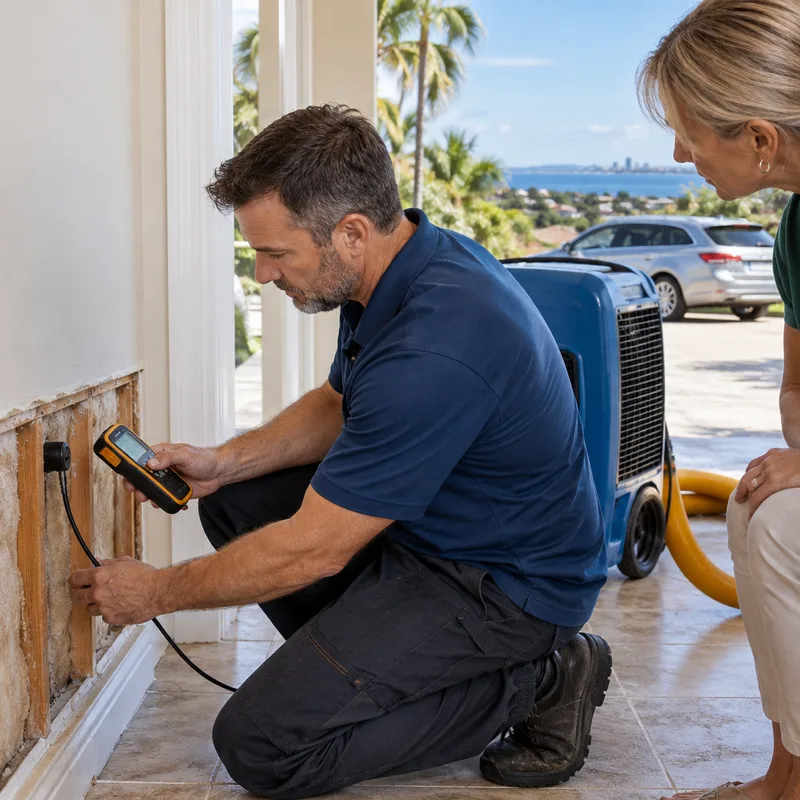
Naples' warm, humid climate affects how quickly wet building materials release moisture. Opening windows can introduce more humid air and work against mechanical drying. Effective restoration creates controlled conditions with dehumidification and directed airflow, then verifies progress through repeat readings.
Drying decisions also vary by material. Baseboards can conceal wet drywall edges. Laminate flooring may swell or separate after water reaches its core. Engineered wood, tile over concrete, and multilayer floor systems each require a different inspection approach. Cabinets may trap water beneath toe kicks, while insulation can hold moisture inside a wall even when the painted surface feels dry.
A qualified water damage restoration company in Naples, FL should be able to explain the water category, affected materials, proposed removals, equipment plan, and monitoring schedule. Ask how drying goals will be established and documented. Clear answers help you distinguish a measured restoration plan from a cleanup based only on appearance.
Stop the source if you can do so without entering water near electrical equipment. Avoid rooms with sagging ceilings, visible electrical hazards, sewage, or outdoor floodwater. Keep children and pets away from the affected area.
If conditions are safe, move dry belongings away from wet surfaces and place foil or blocks beneath furniture legs. Do not use a household vacuum to collect water. Avoid lifting glued flooring or cutting into walls because that can disturb contaminated material or damage concealed utilities.
Take photos of the source and affected rooms before moving items. Save damaged components, appliance information, and relevant receipts until you receive direction from your insurer. Property owners generally report the loss directly to their insurance carrier, while the restoration contractor documents conditions and completed work. Coverage decisions belong to the insurer and depend on the policy and cause of loss.
For water damage restoration in Naples today, early contact allows the team to assess urgency, discuss safe next steps, and prepare appropriate extraction and drying equipment.
Prompt assessment can limit how far moisture travels through floors, walls, and cabinets. Describe what happened, when it started, and whether the water source has been stopped so the response can be planned properly.
Call for Emergency HelpAnswers before service
Water removal and moisture assessment should begin as soon as the property is safe to enter and the source is controlled. Naples humidity can slow natural evaporation, while water may continue moving beneath flooring or into wall assemblies. Immediate priorities are safety, source control, extraction, and moisture mapping.
Many drying projects take several days, but the actual time depends on saturation, materials, access, and indoor conditions. Concrete slabs, cabinets, insulation, and multilayer flooring can extend the schedule. Technicians should use material readings and humidity data to decide when drying is complete rather than relying on a fixed number of days.
Some wet materials can be dried, while contaminated or physically damaged materials often require removal. Clean-water exposure may allow painted drywall or durable flooring to remain if drying begins promptly and readings improve. Sewage, floodwater, swelling, delamination, and trapped moisture can make removal the safer choice.
Cost is driven by the affected area, water category, extraction needs, material removal, equipment quantity, access, and drying time. A small supply-line leak with accessible materials requires a different scope than floodwater affecting several rooms. An on-site inspection is needed before the exact cost can be confirmed.
Coverage depends on the policy and the cause of the water, not simply the amount of damage. Sudden plumbing failures may be treated differently from groundwater intrusion, storm surge, long-term seepage, or maintenance problems. Naples property owners should report the loss promptly and ask their carrier about mitigation duties, deductibles, and flood coverage.
Relocation depends on contamination, electrical safety, the size of the affected area, noise, heat, and whether kitchens or bathrooms remain usable. A contained clean-water loss may allow normal occupancy, while sewage or extensive demolition can make temporary relocation appropriate. Condominium rules may also affect working hours and access.
Ask how the company will identify hidden moisture, classify the water, choose materials for removal, monitor drying, and document completion. You should also receive an explanation of safety concerns, equipment placement, expected access needs, and how changes to the scope will be communicated.
Tell Water Restoration Naples FL what caused the damage, which areas are affected, and when the loss began. The next step is a focused assessment and a practical plan for extraction, drying, cleaning, and necessary material removal.